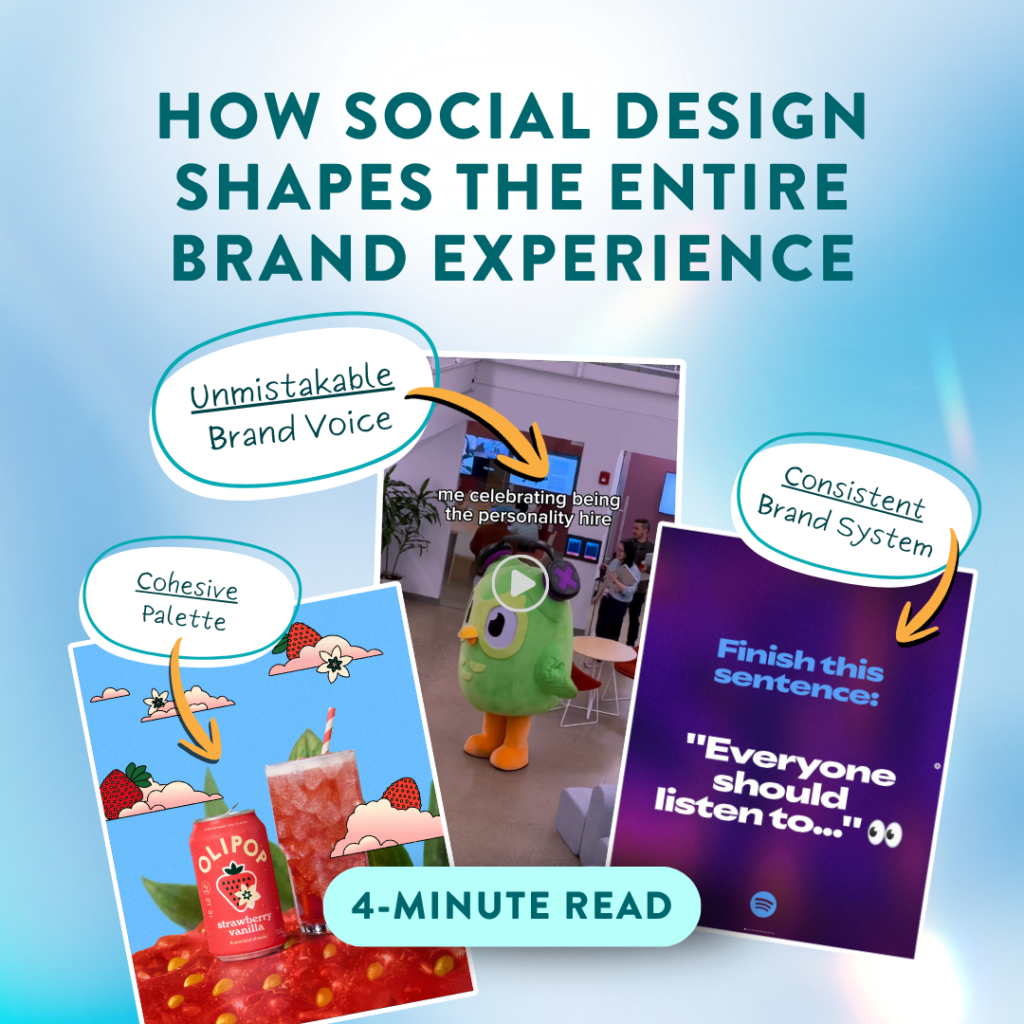

How Social Design Shapes the Entire Brand Experience
4 Minute Read
For many people, their first interaction with a brand does not happen on a website, in a store, or through a sales conversation. It happens while scrolling through Instagram, LinkedIn, TikTok, or Facebook.
Before they learn more about a company, fill out a form, or make a purchase, they’ve already started forming an opinion based on what they see in their feed. The design of a social post can influence whether a brand feels credible, relevant, approachable, or worth exploring further.
That is why social design should not be treated as an isolated marketing asset or simply the final visual layer of a campaign. It’s part of the larger user experience.
Every choice, from the first frame of a Reel to the hierarchy of a carousel, affects how someone notices, understands, and interacts with a brand. Good social design does more than stop the scroll. It creates a clear, intentional first step in the user journey.
Every Social Post Is a User Journey
A social post may seem like a small piece of content, but it often guides users through a complete experience.
In a carousel, the first slide creates interest and establishes context. The following slides organize information and build understanding. The final slide provides a conclusion, takeaway, or next step.
Short-form video works similarly. The opening frame sets expectations, the pacing maintains attention, the visual and audio elements support the message, and the ending provides a payoff or call to action.
These are many of the same considerations found in traditional user experience design. Designers must think about hierarchy, flow, clarity, and friction. They must anticipate what the user needs to know first, what will encourage them to continue, and what action should feel natural by the end.
A post is not successful simply because someone pauses while scrolling. The content also needs to make it easy for them to understand why they should continue watching, reading, or engaging.
Clear Design Reduces Cognitive Effort
Social media users rarely encounter content in ideal conditions. They may be scrolling quickly, multitasking, watching without sound, or viewing content on a small screen. They are also surrounded by countless competing messages.
Because of this, social design needs to communicate efficiently.
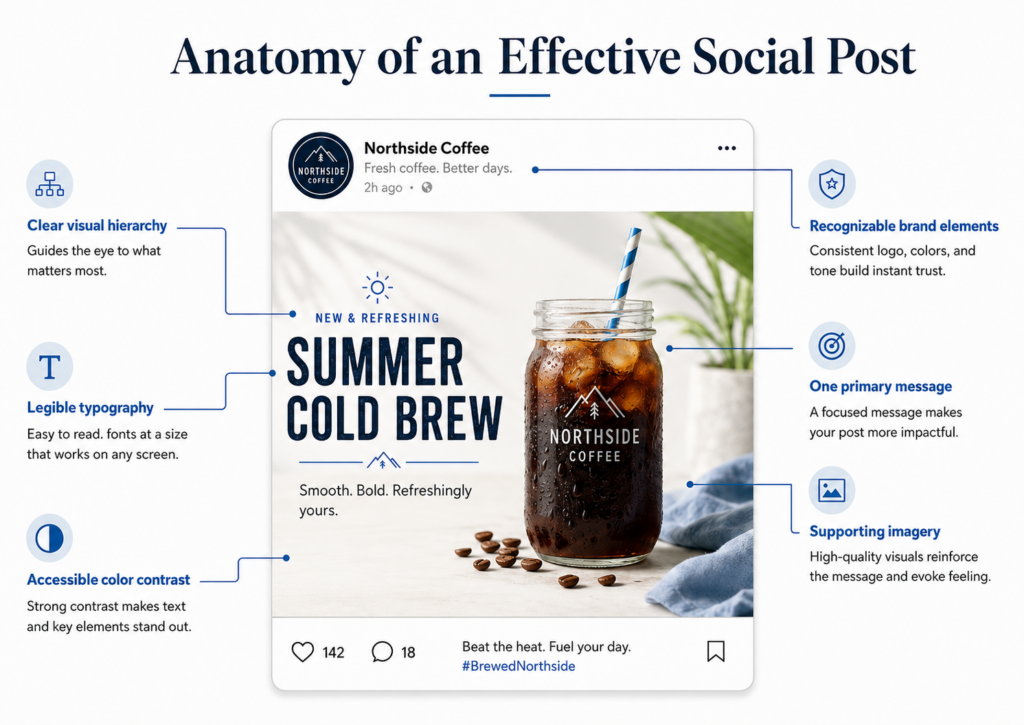
A strong visual hierarchy helps users quickly answer three questions:
What is this about?
Why does it matter?
What should I do next?
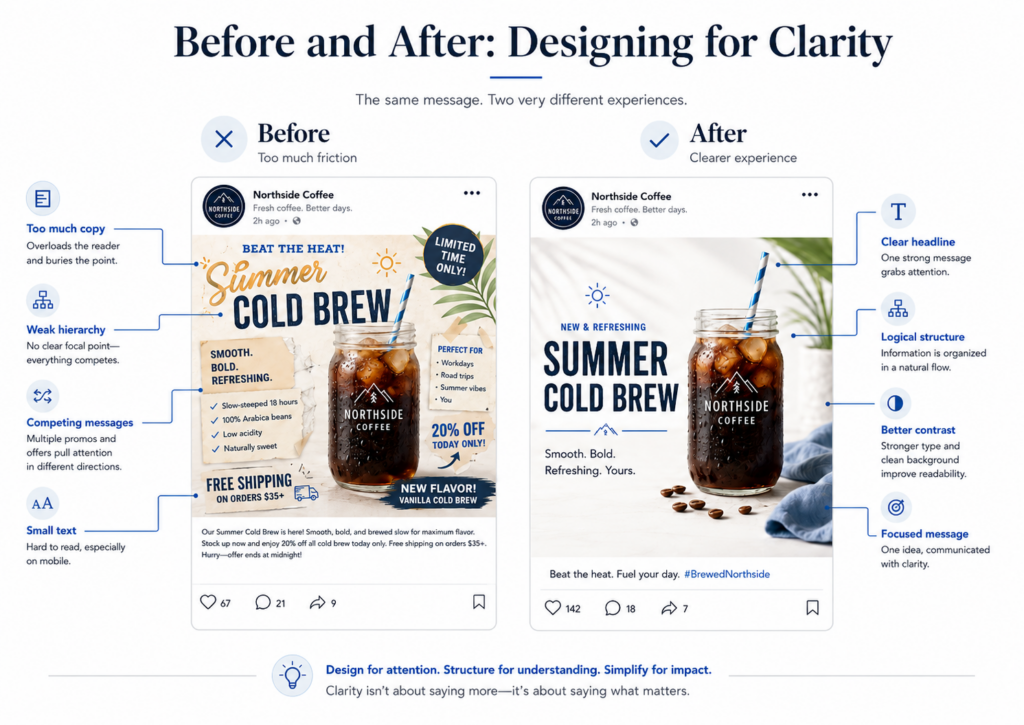
When too many elements compete for attention, the user has to work harder to understand the message. Small text, weak contrast, crowded layouts, and multiple calls to action can create unnecessary friction. Even strong information can be overlooked when it’s not presented clearly.
This doesn’t mean every social post should be overly minimal or stripped of personality. It means each element should have a purpose.
Good design prioritizes information based on what the user needs at each point in the experience. The goal is not to simply include every possible detail. The goal is to guide attention in a way that feels natural and intuitive.
Accessibility Is Part of the Experience
Accessibility should be considered from the beginning of the design process, not added as a final checklist item.
Legible typography, strong color contrast, captions, alt text, and sufficient reading time all help make content more usable. Designers should also avoid relying on sound or color alone to communicate important information.
These decisions support people with disabilities, but they also improve the experience for a much wider audience.
Someone may be watching a video in a noisy environment, scrolling outdoors in bright light, or quickly reviewing a post between meetings. Clear, accessible design helps the message reach users across different devices, environments, and situations.
Accessibility is not a limitation on creativity; It creates clearer parameters and encourages more intentional communication.
Social Design Builds Expectations and Trust
Once someone notices and understands a post, its design begins shaping what they expect from the brand.
A clear, organized, and consistent social presence can signal that a company is professional, current, and thoughtful. A confusing or inconsistent presence can create the opposite impression, even when the business itself offers a strong product or service.
Consistency plays an important role in building familiarity. Repeated use of recognizable typography, imagery, colors, and design patterns helps users identify the brand more quickly over time.
However, consistency does not mean every post needs to look identical. A strong social design system provides enough structure to feel recognizable while still allowing for variety, creativity, and platform-specific content.
Social design should also feel connected to the experience that follows.
A polished post that leads to an outdated website can create a disconnect. A simple call to action that leads to a complicated process can introduce frustration. A helpful educational carousel that directs users to a page without the promised information can weaken trust.
Design sets expectations. When the next interaction does not match those expectations, the user experience begins to break down.
The Experience Matters Even Without a Click
Social performance is often evaluated through measurable actions such as clicks, comments, shares, and conversions. While these metrics are important, they do not capture the full impact of design.
A user may see a post without taking an immediate action and still remember the brand, learn something new, or begin associating the company with a particular feeling or area of expertise.
Over time, repeated interactions help shape brand perception. Clear and consistent social content can make a company feel more familiar and trustworthy when the user is eventually ready to act.
Not every valuable experience produces an immediate result. Social design contributes to the cumulative relationship someone develops with a brand.
Design for the Person, Not Just the Platform
Social design should attract attention, but attention is only the beginning.
Brands should look beyond whether a post is visually appealing or likely to perform well. They should also consider whether the message is easy to understand, the content is accessible, the hierarchy guides the user, and if the experience connects naturally with what happens next.
The strongest social content does not simply fill a feed. It helps users move through an experience with less confusion and more confidence.
When social design is approached with the same care as any other user touchpoint, it becomes more than a marketing deliverable. It becomes part of how people understand, experience, and ultimately trust a brand.
The brands that stand out won’t be the ones creating the most content, but the ones creating the most intentional experiences. When every post is designed with the user in mind, social media becomes more than a place to be seen. It becomes a meaningful extension of the brand itself.