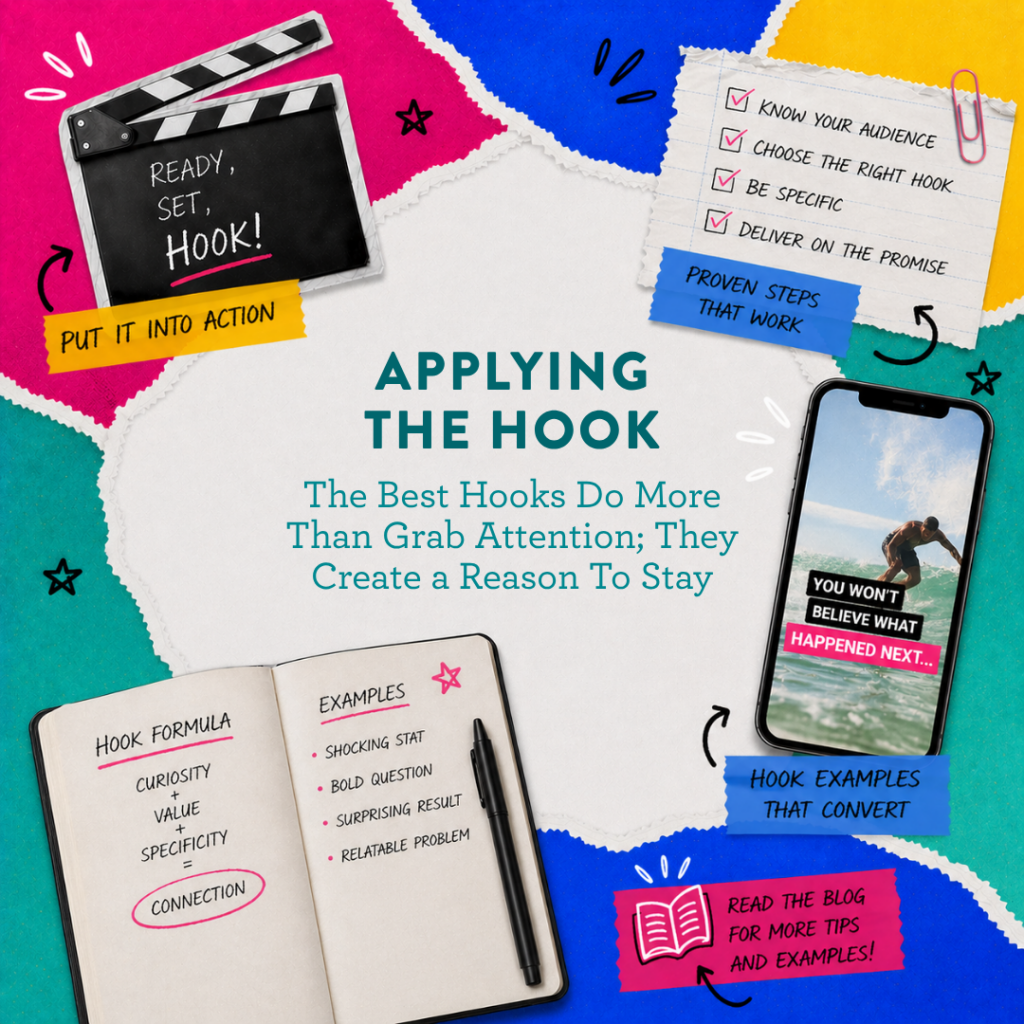

Applying the Hook: The best hooks do more than grab attention; they create a reason to stay
5 Minute Read
TLDR:
Using a hook effectively is not about making the loudest statement, but making the most relevant one. A strong hook should fit the platform, connect naturally to the message, and create the kind of attention that leads people to keep going.
A good hook does more than stop someone for a second. It gives them a reason to stay engaged.
On social, hard-sell language can turn people off if it appears too early or feels too promotional.
The most effective social hooks often lead with curiosity, recognition, value, emotion, or identity.
Strong hooks feel native to the platform rather than copied and pasted from another channel.
The best hooks are connected to what comes next. They do not just grab attention. They set up the message in a way that feels clear and intentional.
Bottom line: Effective hooks do not force attention. They earn it by matching the audience, the platform, and the purpose of the content.
How to Create Openings That Actually Pull People In
Once you understand what a hook is, the next question is obvious: how do you use one well?
That is where things get more practical and, for many brands, more difficult.
Because using a hook effectively is not just about grabbing attention. It is about grabbing the right kind of attention. It is about creating an opening that fits the platform, respects the audience, and makes the next part of the message worth sticking around for.
A lot of marketing misses this.
It confuses volume with effectiveness. It assumes that the strongest hook is the loudest one. But in reality, the best hooks are usually not the most aggressive. They are the most relevant.
Especially on social.
Attention Is Not the Goal by Itself
A hook should never exist just to get noticed.
That may sound strange in a world obsessed with scroll-stopping content, but getting attention without direction is not a strategy. A strong hook does not just make someone pause. It creates a reason to keep going.
That means the hook has to connect to what comes next.
If the opening overpromises, feels manipulative, or leans too hard on generic urgency, people may stop for a second, but they will not stay. On social, that matters even more because trust is fragile and patience is short.
The goal is not to corner people into paying attention.
The goal is to make the content feel worth their time.
Why Hard CTAs Often Fall Flat on Social
Traditional call-to-action language still has its place. There are times when “act now” or “offer ends soon” is exactly the right move. But on social, leading with that kind of language can backfire.
Why? Because it often skips the part where attention and trust get built.
In a feed, people are not looking for a pitch. They are looking for something that feels interesting, useful, relatable, or worth engaging with. The moment a brand sounds too transactional, the content starts to feel like an interruption instead of an interaction.
That is why social hooks often work better when they pull people in rather than push them forward.
Five Hook Styles That Work Well on Social
While every audience is different, social hooks tend to perform best when they lead with one of a handful of patterns. These patterns work because they feel more native to the way people experience content in a feed.
1. Curiosity
Curiosity works because it opens a loop.
It gives people just enough information to spark interest, but not enough to satisfy it. That creates a natural reason to keep reading or watching.
Examples:
“The biggest mistake brands make on social is not what you think.”
“This one change made our content work harder.”
“Most marketing teams are focusing on the wrong thing first.”
Curiosity-based hooks are effective because they feel light. They invite attention instead of demanding it.
2. Recognition
People pay attention when they feel understood.
A recognition hook names a frustration, habit, tension, or reality the audience already knows. It creates an immediate connection because the person on the other side feels seen.
Examples:
“If your content always feels rushed, you’re not the only one.”
“Ever post something that looked fine but still went nowhere?”
“If your brand sounds polished everywhere except social, this might be why.”
Recognition works because it lowers resistance. It tells the audience, “We understand your world.”
3. Value Up Front
One of the strongest ways to earn attention is to offer something useful immediately.
That could be a tip, a framework, a shortcut, or a clearer way to think about a problem. On social, usefulness is often a better opener than promotion.
Examples:
“Three better ways to open a post than ‘limited time only.’”
“Here’s how to make a caption sound less salesy.”
“Try this simple shift before writing your next headline.”
Value-forward hooks respect the audience’s time. They signal that the content is here to help, not just to sell.
4. Emotion
Emotion is not just for big brand campaigns. It matters in everyday content, too.
The key to social is that the emotion usually needs to feel human, not manufactured. It can be honest, reassuring, humorous, validating, or even slightly uncomfortable in a productive way.
Examples:
“Your content does not need to go viral to be effective.”
“It’s not just you. Writing social copy is harder than it looks.”
“Let’s be honest: most people do not open Instagram hoping to be sold to.”
Emotion works because it gives the audience something to feel before asking them to do something.
5. Identity
Identity-based hooks connect with the way people see themselves or want to see themselves.
This can be powerful because it turns engagement into self-expression. The audience is not just reacting to the message. They are aligning with it.
Examples:
“Smart brands know every platform needs a different opening move.”
“If authenticity matters to your audience, it should show up in your hook.”
“The best marketers are not louder. They are more intentional.”
Identity hooks can be especially effective for brand-to-brand content, leadership content, or messaging aimed at professionals who want to see themselves as thoughtful and strategic.
Match the Hook to the Platform
A strong hook is not something you write once and paste everywhere.
That is one of the biggest mistakes brands make.
A message designed for a TV spot may need more urgency and clarity. A message designed for social media may need more relatability and curiosity. An email subject line may need to be tighter. A blog title may need to balance searchability and intrigue. A paid ad may need to get to the value proposition faster than an organic post would.
The hook should match the audience’s mindset in that channel.
That is what makes it effective.
Instead of asking, “Is this a strong opening?” it helps to ask more specific questions:
Does this sound native to the platform?
Does it fit the pace of the channel?
Does it feel like something the audience would actually stop for?
Does it earn attention in the right way?
When those answers are yes, the hook is probably doing its job.
Create the Right Next Step
Another way to think about it is this: a good hook should make the next sentence easier to hear.
It should not feel disconnected from the body of the content. It should not act like bait. It should create alignment between what catches attention and what keeps it.
That is why clarity matters as much as cleverness. A clever opening may win admiration. A clear opening often wins engagement. The best hooks do both.
Using the hook effectively is not about tricking people into stopping.
It is about understanding what kind of opening feels right for the message, the audience, and the platform. It is about creating interest with intention.
The best hooks do not just grab attention; They create a reason to stay.
And that is what makes them effective.