
Why Last-Click Thinking Is Hurting Your Marketing
2 Minute Read
Too many businesses are still making marketing decisions based on the easiest thing to measure instead of the things that actually drive results.
They look at the last click, give it all the credit, and build strategy backward from there.
That’s a mistake.
The final click might show where a lead converted, but it doesn’t explain why that person was ready to act. It doesn’t account for the earlier ad they saw, the second visit to the site, the research they did on their own, the comparison page they came back to, the review they read, or the trust that was built over time.
But that’s where the real decision happened.
This becomes even more important as the buying cycle lengthens and the purchase becomes more expensive, which we discuss in our Navigating the Customer Journey blog. A low-cost impulse buy may happen after one or two interactions. A major service investment, a high-consideration B2B decision, or an expensive product usually takes more. More research. More comparison. More time. More touchpoints.
Think about a company selling a higher-ticket service. A lead may convert through a branded search ad or a direct visit, and in a last-click model, that final action gets all the credit. But that same lead may have first discovered the company through paid social, later visited the site through organic search, read a case study a week later, saw a retargeting ad, and only then came back through search to fill out a form. The last click closed the loop, but it didn’t create the demand all on its own.
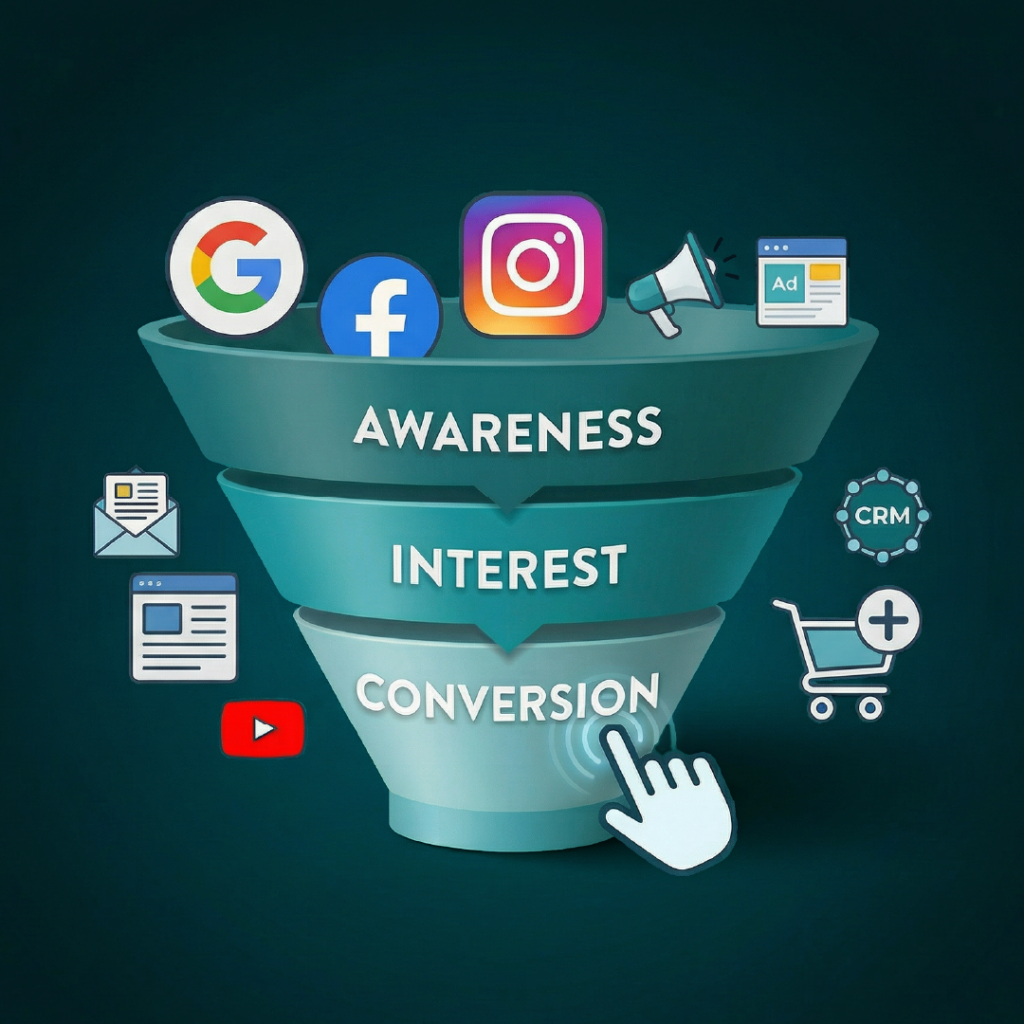
That is why bottom-funnel tactics cannot be treated like a standalone growth engine. If your marketing is not creating awareness and engagement upstream, the lower funnel eventually runs out of people to convert. Retargeting audiences get smaller. Branded search weakens. Lead volume slows. Then teams start pushing harder on the last step without fixing the real problem higher up in the journey.
When businesses obsess over last-click attribution, they tend to overfund bottom-funnel tactics, undervalue awareness and consideration work, and miss the bigger picture of how buyers actually move. They optimize for what is easiest to report, not what is most important to influence.
That doesn’t just create weak reporting; it creates weak strategy.
If you want smarter marketing decisions, you have to stop treating the final click like the whole story and start seeing the full user journey that made the conversion possible.